
Chapter One
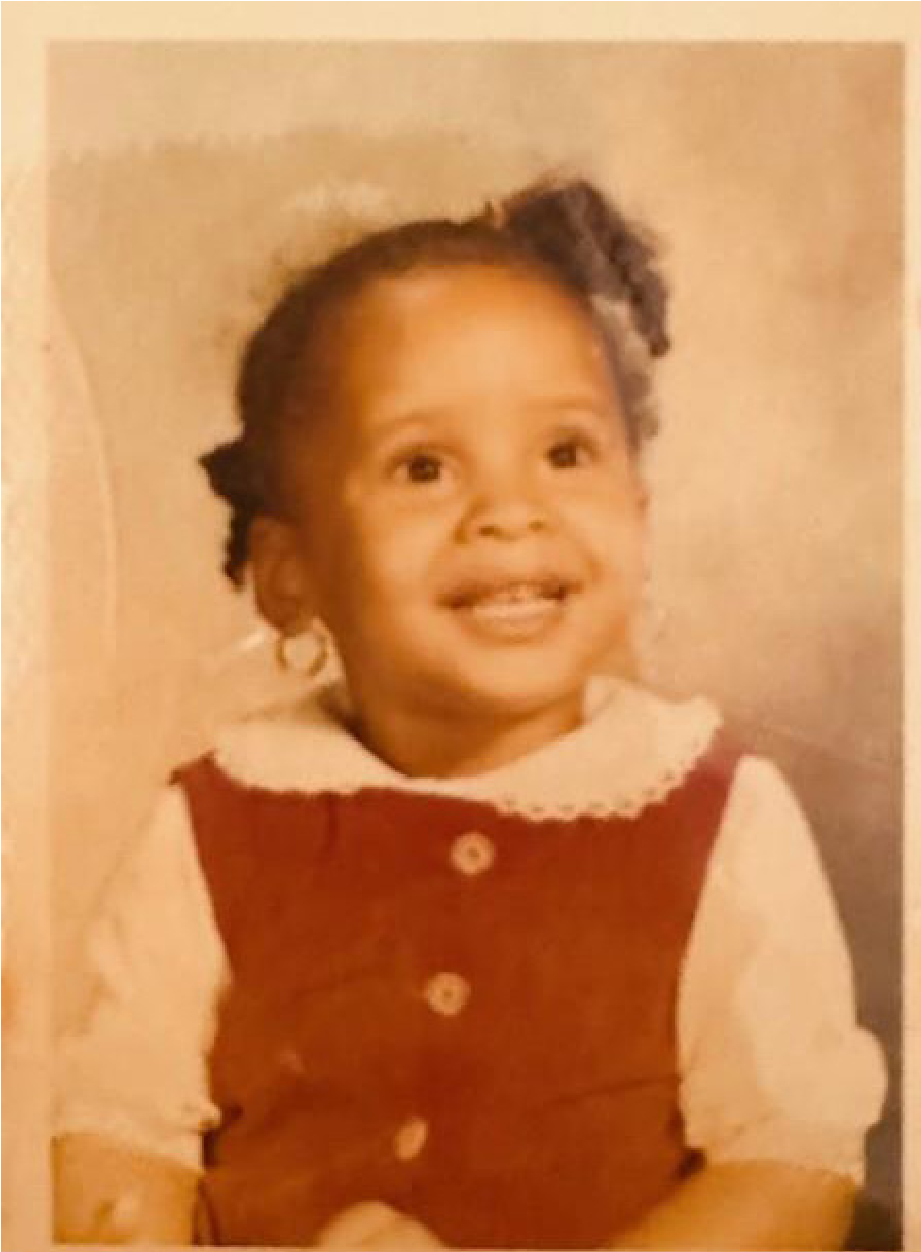
When I Was Too Young to Know Better
“Before I formed you in the womb, I knew you; before you were born, I set you apart.”
—Jeremiah 1:5 (NIV)
Every journey has a beginning.
Mine began with an absence that disguised itself as normal. I had no idea I was being formed by what was missing. I didn’t have words for neglect or longing, or invisible rules, but I sensed them in my skin. In the night’s silence, my bed felt borrowed, never mine. The way my mother’s moods could turn without warning, mild one moment, sharp the next, leaving me to tiptoe around the edges of her storms.
My father’s affection flickered like a light I could witness but never reach, always just far enough ahead to make me run after it.
Lack of emotional connection is tricky. At times, it’s the silence that injures you—the voids, the areas where affection ought to have resided but did not.
It’s about the early imprints, the kind that etch themselves into a child’s wiring before she can name what they are. It’s about a small girl trying to belong in a household where her toys had more space than she did.
My name is Marilyn Cross, and one of my earliest memories is from somewhere around 1976 or 1977, when I was about six or seven years old. We lived on Ivanhoe Avenue in Baltimore, MD.
My father rented the dwelling for my mother and me—or at least, that is my belief. Technically, it was a two-unit apartment, but to me, it was a kingdom.
Upstairs was a mystery. The toy room? All mine.
At the top of the stairs were two doors—one straight ahead, one to the right. The right-hand door led to the upper apartment. I never cared who lived there. My world lived on the first floor.
To the left was a sun porch—enclosed, warm, and bursting with toys. That room made sense. It had walls. It had a purpose. It had order. It was mine… even if only by default. The rest of the dwelling flowed around it: a loveseat to the side, a long-curved couch opposite—the kind that says, “This space isn’t yours.” Then the dining table. And a kitchen. My mother’s bedroom, with its own full bath, sat off to the left.
But what stayed with me was this: My toys had a room. I didn’t.
My bed sat out in the open. No door. No privacy. No corner to call my own. And with the lesson humming in the background, it was not long before I found myself in trouble only a girl aching for her dad’s adoration can create.
My dad ran a modest corner store down the hill from our house-apartment. A shop that sold eggs, snacks, and just enough attention to feel like magic. One day, I decided to find him. I left the apartment by myself and walked straight to the store.
He wasn’t there.
The man behind the counter said my dad stepped out, so I turned around and walked back home. I was proud of myself. I had been brave. Independent. But when I got back, my mother was outside pacing, panicked, yelling. The shrill of her voice could cut concrete. I don’t remember if I got a beating, but I remember the shame. That moment stamped itself into my spirit.
Because I wasn’t running from her, I was running to him.
My mother was my world. I did not want to leave her behind. But I needed my dad, too. There is something real about the phrase “daddy’s girl.” There is a pull, a hunger, that takes root in a daughter when that connection is fractured or missing. Those moments are etched in me, small snapshots I can still feel if I close my eyes. If I let myself drift long enough, I can almost step back into that room, hear the faint hum of the TV, feel the weight of being small and safe beside her.
I remember curling up beside Mom on that yellow-gold, plastic-covered sofa, the two of us sharing snacks while the TV flickered in the background. Her skin was light brown; that’s just how I remember it when I leaned against her. Her body was warm, safe, and tender. We’d walk to the corner store together, her metal basket rattling against the sidewalk, just the two of us. No stroller, no crowd, just mother and daughter. She was gentle then, teaching me word games, correcting my grammar with patience, laughing over rhymes and riddles.
For a little while, I had a gentler version of her. Those days were brief, but they glowed. Her laughter came easily then, her patience unforced. I didn’t know to treasure it; I thought her nurture would always be mine. But when she remarried, and later when she changed her faith from Christianity to Islam, her fondness for me slipped away. That season in our environment shifted everything, but the memories of my father lived in a distinct part of me-untouched, still glowing.
I was also too childlike to have known she was already carrying the burden of her own pain, trying to survive as a single Black woman in a world that gave her no margin. But once she became Muslim, something in her hardened. The kindliness dissolved. I never got that version of her back.
“I am astonished that you are so quickly deserting the one who called you to live in the grace of Christ and are turning to a different gospel…”
—Galatians 1:6–8 (NIV)
Then there is one memory I hold like fine glass.
It felt simple, ordinary even—a dad, and a daughter were in the same room. But hiding inside that imprint was a truth I was too young to see; he was the key piece I needed, and the absence would ripple through everything that followed. All I knew was that when he held me, the world stopped wobbling.
My dad showed up one afternoon. He sat on the loveseat to the right. I climbed into his lap—giddy, squirmy, full of the belief that devotion could fix anything. He smiled. Still. Silent. Just soaking me in.
No words. Just his being.
The sweet impression glows in my mind, half dream, half reality, suspended between what was and what I needed it to be. I do not know if it happened or if I needed it to happen. But I carried it as if it did.
That longing for presence—even imagined—became a compass in me, pulling me toward any space that radiated warmth. It took years before I learned the pieces that made that moment make sense. What I’ve pieced together is this: my parents met when my father—Langston—was working in environmental services at a hospital in Baltimore. He was ten years older than my mother, who had me at nineteen.
She was young and delicate-featured. Light brown exterior. A full, womanly figure—curves into which I would much later grow. She was quiet but iron-willed. Once her mind was made up, that was it. I inherited that too. Aunt Arjorie, her older sister, once told me, “Your mother would go to extremes for what she believed in.” I did not understand it then. I would later.
During the Black Power movement of the late 1960s and 1970s, those “extremes” looked like her slipping into marches and protests, standing shoulder-to-shoulder with other women who believed their company mattered as much as their men’s. She was not loud, not the type to throw a fist or shout down a crowd. She was soft—so gentle that if you pressed her with a feather, she might faint. But there she was, Afro crowned high, eyes steady, giving herself to the cause. She carried a kind of militant awareness—not aggression but resolve. Her fight was not with her fists but with her presence, her willingness to say by showing up, we deserve more! We deserve better!
His brothers all served in the Navy. And decades later, my daughter Nova would enter the Naval Academy, carrying that same torch of ambition, rebellion, and honor. My mother grew up in Alberta, Virginia. Small town. Slow pace. My grandparents owned their home near a railroad. That’s where I spent my summers with my cousins. It felt like freedom. My cousins Celeste and Monee and I ran through cornfields, barefoot and joy filled.
My grandmother, Katherine, had skin like clay and long white hair that softened with every brush. As soon as I’d arrive, I’d race to her bedroom to grab a comb and then sit behind her on the back of the loveseat, brushing her hair for hours. It was our calm ritual. No lectures. No tension. Just her essence.
She saw me.
And when she baked cakes, she would leave batter in the bowl just for me. Not for the house. Not to share.
Just for me.
That was adoration. And I knew it.
Years later, my sister Naima would help me recognize pieces of our mother I could not have known as a child. Naima’s stories revealed that what I perceived as mere sweetness in our mother held a harsher reality. Mom had been the youngest or next to the youngest of nine, carrying traumas no one dared to name. Naima told me she left Virginia because she did not feel seen, and Baltimore became her chance at a start.
That’s how I became a Baltimore girl.
My grandfather, Calvin, was striking—red-toned skin, silver-streaked Afro, and a spotless vintage car that gleamed like it was part of him. Summers with him were magic. He was not a man of many words, but when he slid behind the wheel, joy spoke for him.
Granddad would take my cousins and me down winding back roads, pressing the gas just right as we hit the hills, sending our stomachs dropping and our squeals spilling into the air. He would laugh—a low, knowing chuckle—as if our laughter was the prize he was chasing. And just when we thought the ride was over, he would steer us toward ice cream; the day stretched sweet and endless. Those visits threaded themselves into me—quiet proof that tenderness could live in simple, deliberate moments.
One recollection still shines in my chest like stained glass.
My grandparents’ residence was a modest yellow ranch-style setting with three bedrooms, nothing fancy, but it held the heart of our summers. Out the front door, you stepped onto a small lawn, then straight across to a gravel road. Cars would crunch along that path, then turn right down the long stretch before swinging left to cross the railroad tracks, another left to meet the main road. That is how you got to their house, stuck so close to the tracks that when a train was coming, we could hear it a mile or two out, the low rumble announcing itself before it ever appeared.
In the movie The Color Purple, there is a scene where the conductor leans out and scatters candy to the children waiting below. That was not just a scene to me—it was our reality. The train employees were acquainted with my grandfather. When they passed, they’d blow the horn, a sound that sent us running barefoot across the gravel, arms wide, bracing for candy to rain from the sky. Our laughter would rise above the rattle of the tracks as butterscotch and peppermints scattered into the dust and sunlight.
That was a joy. Care lives in those moments.
Those memories, especially with my grandmother, are still my sanctuary. Her presence. Her hair. Her batter bowls. Grandma’s tender care. Now that I am grown, I see things differently. And looking back, I observe how the Most High used those fractured beginnings as raw material for resilience, even when I did not yet know His name.
My mom was young. Alone. Under-supported. She was trying to mother while still healing. My dad, flawed and inconsistent, still made sure we had a roof over our heads. That counted. But I also see the holes—the emotional potholes left by inconsistent devotion. The way wordlessness can shout. Or neglect can be dressed up in routines and rules. How a child will settle for attention when what she craves is affection. Back then, I did not know God. My grandmother, Katherine, took me to church, but the sermons and hymns did not sink in; they were motions, not meaning. Still in those years, I carried a sense of something—like a covering I could not name, a presence I could not explain. I would not have called it The Most High then, but now I know that is Who it was.
“For if the willingness is there, the gift is acceptable according to what one has, not according to what one does not have.”
—2 Corinthians 8:12 (NIV)
He was there, forming me, even when I was too young to know better.